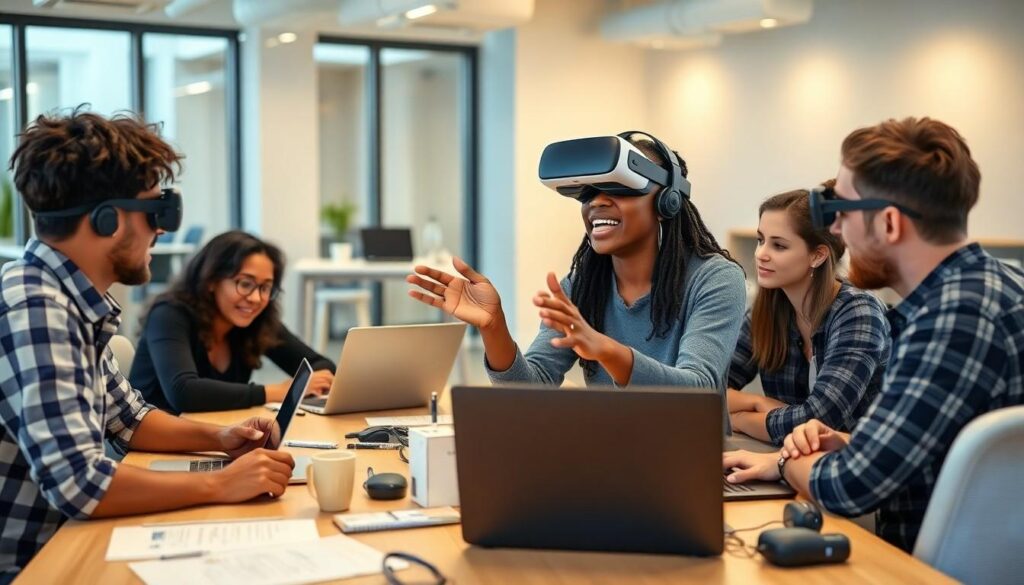
Imagine stepping into a world where your browser isn’t just a window to the internet but a portal to augmented reality. That’s right! With AR in the browser, the mundane becomes magical. No need for fancy headsets or expensive gear; just a device and a little curiosity can turn your everyday surroundings into an interactive playground.
Table of Contents
ToggleOverview of AR in Browser
Augmented reality in browsers enhances user experiences by overlaying digital content onto real-world environments. This technology harnesses the power of everyday devices, making it accessible to a wider audience. Users interact with AR content seamlessly, with no need for specialized hardware or software installations.
Several web technologies, including WebXR, play a crucial role in enabling AR experiences. WebXR standardizes the way AR and virtual reality functionalities are integrated into web applications. Through this standard, developers can create immersive environments that adapt to the user’s context, ensuring smooth interactions.
AR in browsers finds applications across various industries. Retailers utilize it to enable virtual try-ons of products, improving customer engagement. Education platforms employ AR to create interactive learning experiences, allowing students to visualize complex concepts.
User engagement often spikes when AR elements make tasks more enjoyable. Gamification techniques, such as location-based challenges, encourage users to explore their surroundings. These features enhance retention and create memorable interactions.
A significant benefit of browser-based AR is the ease of updates. Developers can implement changes in real-time, enhancing user experiences without requiring downloads. As the technology continues to evolve, more sophisticated AR functions may emerge, further enriching the digital landscape.
The future of AR in browsers looks promising, as increased mobile device capabilities contribute to improved experiences. Greater integration with social media platforms may also drive wider adoption. As users become more familiar with AR technology, its potential applications in everyday life will expand.
Benefits of AR in Browser
AR in browser technology brings numerous benefits, enhancing interactions in real-time and making information more engaging.
Enhanced User Experience
AR enhances user experience by providing interactive elements on live environments. Users can view virtual objects overlaid in their surroundings, creating immersive experiences. Realistic virtual try-ons in retail, for example, let customers visualize products before purchase. Educational tools also enrich learning experiences with dynamic visual aids. Engaging users through gamification techniques encourages participation and retention. The ability to seamlessly blend digital content with reality makes tasks enjoyable and memorable, capturing attention effectively.
Accessibility and Usability
AR in browsers ensures accessibility for all users, requiring only standard devices like smartphones or tablets. No need for specialized hardware makes this technology widely approachable. Simple interfaces allow users to engage with AR content without technical barriers. Developers can create experiences that reach various demographics, broadening exposure. It’s easy for anyone curious about AR to explore this technology. Constant updates improve usability, allowing developers to refine experiences continuously. Immediate access to AR applications directly through browsers eliminates the fuss of installations, further streamlining user interaction.
Popular AR Technologies
Augmented reality relies on various technologies to deliver immersive experiences. Key platforms such as WebXR and AR.js are integral to its development.
WebXR
WebXR stands as a prominent standard for creating augmented and virtual reality experiences in web browsers. This technology simplifies integration, enabling developers to craft interactive environments seamlessly. Key features include support for a wide range of devices, ensuring access for various users. Developers can utilize WebXR to access sensors and cameras, facilitating real-time interactions with digital content. With its compatibility across major browsers, its use in applications like 3D visualization and virtual tours has increased significantly. WebXR fosters an engaging user experience through immediate interaction, making it a preferred choice among developers.
AR.js
AR.js is a lightweight library designed for deploying augmented reality directly in web browsers. This tool enhances AR experience while ensuring high performance, even on mobile devices. Developers appreciate AR.js for its simplicity and ease of use, allowing them to create AR applications with minimal effort. The library supports marker-based and markerless AR, enabling different application scenarios. Thanks to its open-source nature, a community of contributors continually improves its features and capabilities. Its compatibility with three.js further expands creative possibilities, making AR.js a vital asset for web developers interested in incorporating AR capabilities.
Use Cases of AR in Browser
AR technology transforms various industries by enhancing user experiences and providing unique interactions. Several domains, including retail, education, and gaming, benefit significantly from AR in web browsers.
Retail and E-Commerce
Retailers utilize browser-based AR to offer virtual try-ons, allowing customers to visualize products in their environments. This technology increases customer engagement as users interact with items before purchasing. Furniture retailers, for example, enable consumers to see how a sofa fits in their living room. Brands gain valuable insights through user interactions, optimizing product offerings based on preferences. Shoppers find the convenience of accessing AR directly in web browsers appealing, as it eliminates the need for app installations or specialized devices.
Education and Training
In education, AR fosters immersive learning experiences that captivate students and enhance understanding. Course materials become interactive through vibrant 3D models, making complex subjects more approachable. Educators can leverage AR for virtual field trips, transporting students to historical sites or scientific explorations. Additionally, training programs incorporate AR simulations to familiarize employees with equipment without risks. This hands-on approach improves retention rates and encourages active participation from learners.
Gaming and Entertainment
Gaming developers embrace AR in browsers to create captivating, engaging experiences that blur the lines between the virtual and real worlds. Players enjoy interactive gameplay without downloading heavy applications or complex setups. Multiplayer AR games encourage social interaction, allowing friends to compete or collaborate directly within their surroundings. Entertainment platforms increasingly incorporate AR features, providing users with immersive storytelling experiences. This technology elevates content consumption while making it more dynamic and participatory.
Challenges and Limitations
AR in browsers faces several challenges that can hinder its full potential.
Technical Constraints
Technical constraints limit the performance and experience of AR applications. Factors such as browser compatibility, device capabilities, and internet speed impact overall functionality. Many users rely on smartphones or tablets with varying hardware specifications, which can affect rendering quality and frame rates. Moreover, limited sensor accuracy on some devices hampers the effectiveness of spatial mapping. Developers often encounter difficulties optimizing AR experiences for numerous devices in varying conditions. Standardizing AR experiences across different browsers poses significant challenges as well, creating discrepancies in user interactions.
User Adoption
User adoption of AR in browsers remains uneven across demographics. Many individuals lack awareness of AR capabilities and their potential benefits, reducing engagement levels. Comfort with technology also varies, leading to hesitance in exploring new applications. Some users may feel overwhelmed by the technology or assume that technical skills are required, creating a barrier to entry. Without widespread education on AR’s uses, convincing users to incorporate it into daily activities proves difficult. Additionally, data privacy concerns can deter users from engaging with AR experiences, further stifling broader adoption.
AR in browsers is reshaping how users interact with their environments. Its accessibility and ease of use make it a powerful tool for enhancing everyday experiences. As technology continues to evolve AR’s potential to engage users across various industries will only grow.
With advancements in web standards like WebXR and tools such as AR.js developers can create more immersive and interactive applications. The future looks bright as AR becomes an integral part of daily life expanding its reach and impact. Embracing this technology opens up new possibilities for creativity and interaction paving the way for a more connected and engaging world.