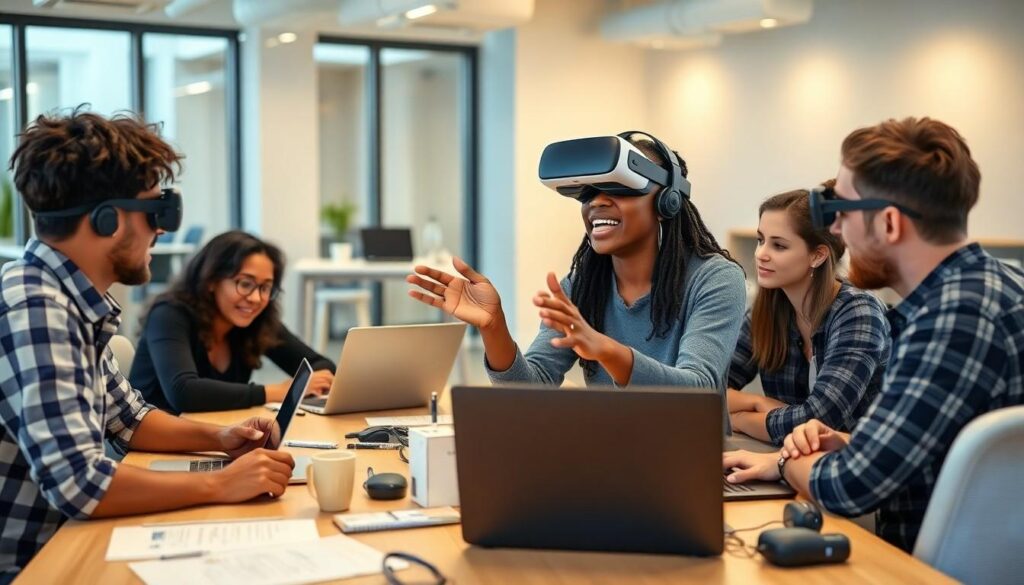
In a world where reality sometimes feels a bit too mundane, augmented and virtual reality apps are shaking things up. Imagine slipping on a headset and finding yourself in a dinosaur-infested jungle or using your smartphone to turn your living room into a cozy café in Paris. With AR and VR, the possibilities are as limitless as your imagination—and the demand for these apps is skyrocketing.
Table of Contents
ToggleOverview of AR/VR App Development
AR and VR app development involves creating software that enhances user interaction through immersive experiences. Developers utilize advanced technologies to design applications that can overlay digital content onto the real world or generate entirely virtual environments. Companies invest heavily in these applications, driven by the increasing demand for more engaging user experiences.
User insights play a crucial role in AR and VR development. By understanding user preferences and behaviors, developers can create tailored applications that meet specific needs. Research shows that businesses integrating AR and VR experiences see higher engagement levels compared to traditional methods.
Adopting agile methodologies often streamlines the development process. Developers release iterations quickly, allowing for timely feedback and adjustments. Platforms such as Unity and Unreal Engine provide essential tools for building high-quality AR and VR applications efficiently.
Collaboration between designers, engineers, and content creators is vital for successful projects. A multidisciplinary approach ensures all perspectives contribute to the final product. Testing and optimization are also critical, as usability influences the overall experience significantly.
Investment in hardware is another important aspect. The availability of affordable devices such as smartphones, VR headsets, and AR glasses has expanded access. Developers focus on ensuring compatibility across a range of devices to reach wider audiences.
Market growth forecasts indicate continuous expansion in the AR and VR sectors. By 2024, the global AR and VR market is projected to reach over $300 billion. The evolution of technologies, along with increased consumer adoption, will shape the future of AR and VR app development significantly.
Key Technologies in AR/VR
AR and VR development utilizes various technologies that enhance user experiences. These technologies enable immersive encounters and transformative applications across industries.
Augmented Reality Technologies
AR technologies integrate digital content with the physical world. Computer vision plays a vital role, allowing devices to recognize and interact with real-world elements. Depth tracking enables the accurate overlay of virtual objects, ensuring they blend seamlessly with their surroundings. Mobile AR frameworks, such as ARKit and ARCore, empower developers to create engaging experiences on smartphones. Additionally, spatial mapping creates a 3D representation of the environment, enhancing user interaction. The combination of these technologies fosters rich experiences that captivate users.
Virtual Reality Technologies
VR technologies focus on creating fully immersive environments that transport users to new realms. Head-mounted displays serve as the primary interface, providing a 360-degree view of virtual scenes. Tracking systems follow user movements, allowing natural navigation within these environments. Controllers and haptic feedback devices enhance interactivity, enabling users to manipulate objects and engage with the virtual world. Game engines, such as Unity and Unreal Engine, provide robust frameworks for developing complex VR applications. Together, these technologies allow developers to craft realistic and engaging virtual experiences.
Design Principles for AR/VR Apps
Effective design principles enhance the user experience in AR and VR applications. Focusing on user interactions makes technology more engaging and intuitive.
User-Centered Design
User-centered design places users at the heart of the development process. By gathering user insights, developers identify needs that lead to satisfying experiences. Techniques like user testing highlight real-life interactions and aid in refining app features. Customization enhances personal relevance, making users feel connected to the content. Additionally, accessibility features ensure that diverse audiences can partake in immersive experiences, widening the user base.
Interaction Design
Interaction design focuses on creating seamless and intuitive navigation within AR and VR environments. Designers prioritize clear visual cues, guiding users through the digital landscape. Including natural gestures for interaction, like hand movements or gaze control, fosters a more immersive experience. Effective audio feedback also enhances understanding and engagement, confirming interactions. Designing environments that respond to user actions creates a sense of agency, making experiences more impactful.
Development Tools and Frameworks
A variety of development tools and frameworks support AR and VR application creation. Each tool caters to specific needs and preferences across different projects.
Popular Frameworks for AR/VR Development
Unity ranks among the most popular frameworks for AR and VR development due to its versatility and comprehensive asset store. Unreal Engine also garners attention for its high-quality graphics and robust capabilities, appealing to developers aiming for detailed environments. ARKit and ARCore stand out as essential mobile AR frameworks, allowing developers to craft engaging applications for iOS and Android. Vuforia offers an easy integration experience for image tracking and recognition. Each framework has distinct features, shaping the developer’s choice based on project requirements and target platforms.
Comparison of Development Tools
Comparing development tools reveals significant differences in capabilities and performance. Unity excels in cross-platform deployment, streamlining the process for developers. Unreal Engine focuses on advanced graphics, catering to high-end applications while demanding more system resources. ARKit and ARCore emphasize ease of use, providing optimized tools for mobile devices. Vuforia offers strong tracking abilities but may limit some graphic features. Selecting the right tool depends on project goals, platform requirements, and the desired user experience. Developers must consider these aspects to ensure the best outcome for their AR and VR applications.
Challenges in AR/VR App Development
AR and VR app development faces several key challenges that developers must navigate. High hardware requirements often limit accessibility, as users may need advanced devices to experience full functionality. The cost of these devices can impact market reach, making it essential for developers to consider budget constraints during design.
User experience poses another significant hurdle. Immersive interfaces require intuitive interactions, necessitating thorough testing and refinement. Feedback from users is crucial for identifying pain points and improving engagement. Additionally, optimizing apps for various platforms adds complexity, as developers must ensure consistent performance across devices.
Content creation remains a pressing challenge. Crafting high-quality, engaging content demands skilled designers and developers, often resulting in longer development times and higher costs. Balancing visual quality with performance creates a constant tension in the design process.
Privacy and security concerns also complicate AR and VR development. As applications collect and utilize personal data, stringent measures must be implemented to protect user information. Developers must stay informed about regulations to avoid potential legal issues.
Lastly, keeping up with rapidly evolving technology creates an ongoing challenge. Staying current with the latest tools, frameworks, and trends requires continuous learning and adaptation. Developers need to invest time in education to leverage new advancements effectively.
The combination of these factors means that success in AR and VR app development demands careful planning and execution. Attention to user needs and technological trends drives the creation of compelling, engaging experiences.
Future Trends in AR/VR
Advancements in both AR and VR technologies promise significant enhancements in user engagement. Devices are becoming more affordable and accessible, driving widespread adoption. Enhanced realism through improved graphics and processing power remains a key focus. Notable trends include the rise of 5G networks, which facilitate smoother experiences in AR and VR applications.
Moreover, AI integration is reshaping user interactions by enabling smarter, more responsive environments. Dynamic content personalization enhances relevance for individual users, increasing overall satisfaction. Cross-platform compatibility is also becoming a priority, allowing seamless engagement across various devices.
Social interactions within virtual environments are evolving as well. Users increasingly expect collaborative experiences, making social VR a growing area of exploration. The gaming industry often spearheads these trends, yet sectors like education and healthcare are also embracing AR and VR for immersive learning and training solutions.
Sustainability concerns influence the development of AR and VR content as well. Eco-friendly practices in hardware manufacturing and digital content creation are gaining traction. Enhanced privacy measures address user concerns, ensuring data protection and trust in applications.
In terms of design, user-centered approaches continue to dominate. Incorporating feedback loops enhances the development process, allowing for iterative improvements based on real user experiences. Accessibility in AR and VR applications ensures inclusivity, catering to diverse user needs and preferences.
The landscape of AR and VR app development is evolving rapidly, driven by technological advancements and changing consumer behaviors. Tracking these trends provides essential insights for developers aiming to create impactful and engaging applications.
AR and VR app development is at the forefront of technological innovation. As these immersive experiences become more accessible and user-friendly, they’re set to redefine how individuals interact with the digital world.
The emphasis on user-centered design and collaboration among developers, designers, and content creators will ensure that applications meet diverse needs. With advancements in hardware and the integration of AI, the potential for more engaging and personalized experiences is immense.
As the market continues to grow, staying ahead of trends and addressing challenges will be crucial for developers. By focusing on quality, accessibility, and user feedback, the future of AR and VR holds exciting possibilities that can transform various industries.